



Zhejiang Sinray Electronics : Your Trustworthy Fast AC Charger Supplier!
Zhejiang Sinray Electronics Co., Ltd. is one of the leading companies in China specializing in the research, development and sales of new energy electric vehicle charging stations and AC and DC charging piles. We have a strict quality assurance system, a complete management system, and high-quality product after-sales service which are our foundation.
Rich Products
We can produce AC electric vehicle chargers, DC electric vehicle chargers, portable electric vehicle chargers, DC fast chargers, 30KW DC electric vehicle chargers, AC vehicle chargers and 22KW AC chargers, etc.
Products Widely Used
We manufacture products for residential charging, commercial use, parking lots, public spaces, dealers and service centers, corporate campuses, municipal infrastructure, car-sharing services and more.
Customizable
Our products can be OEM customized and we hold more than 60 utility model patents; we also provide comprehensive solutions including process flow support, automation technology, services and training.
Quality Assurance
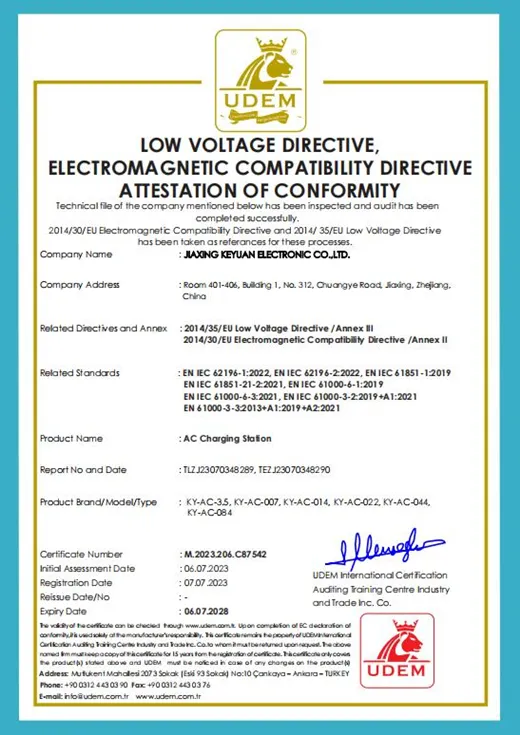
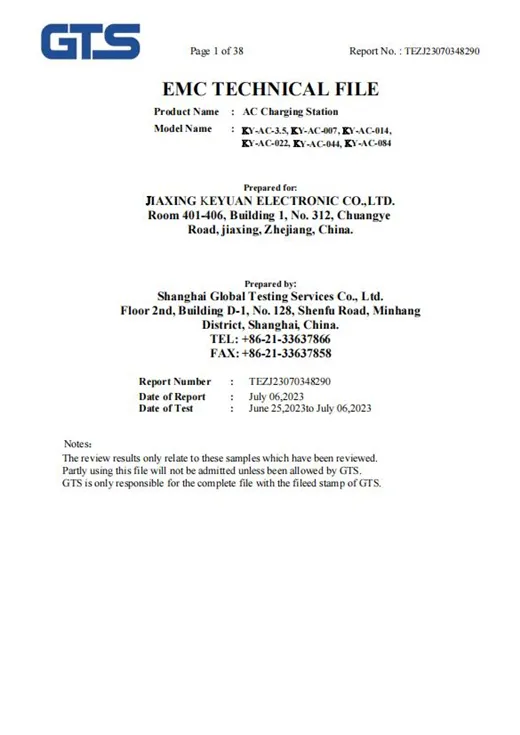
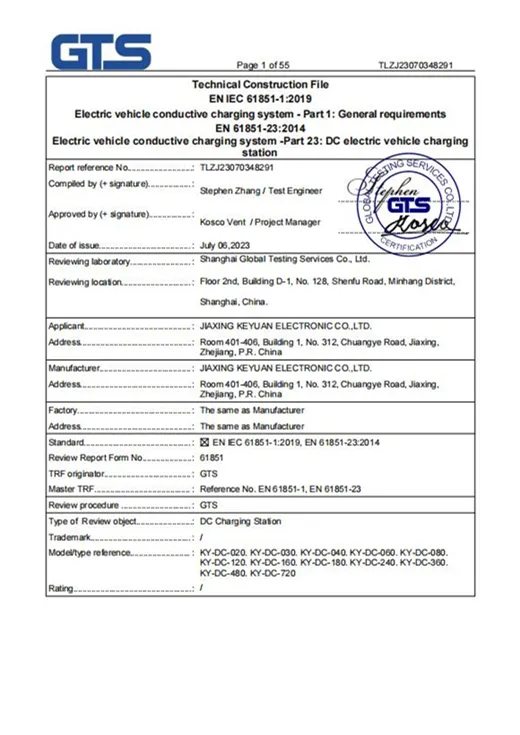
The products produced by our company have passed GTS and CE quality standards. During the warranty period, we will provide after-sales service free of charge.
Related Product Introduction

The AC Fast Charging Wallbox is a fast charging wall-mounted device that provides an efficient charging solution for electric vehicles. This wall-mounted charging device can quickly charge electric vehicles through AC power, providing users with a convenient and reliable charging experience. AC Fast Charging Wallbox is widely used in homes, offices, parking areas, and public charging stations, providing users with convenient charging options in daily life.

AC Charger for Car is an adapter designed to plug into a standard AC outlet to charge in-vehicle devices at home or in the office. This portable adapter provides a wider range of charging options for devices commonly used in vehicles with onboard chargers. It can be used to charge a variety of electronic devices such as smartphones, tablets, positioning and navigation devices, cameras, etc., thereby helping users maintain the continued vitality of their devices outside of driving and while traveling.

A 22kW AC charger, also known as a Level 2 charger, is a type of electric vehicle charging station that is capable of providing power at a rate of 22 kilowatts when charging an electric vehicle. These chargers use Alternating Current (AC) power to charge the vehicle's battery.

A 44kW AC charger, also known as a Level 2 charger, is a type of electric vehicle charging station that is capable of providing power at a rate of 44 kilowatts when charging an electric vehicle using Alternating Current (AC) power. These chargers offer a faster charging speed compared to lower power chargers, allowing electric vehicle owners to recharge their vehicles more quickly and efficiently.

A Type 2 Fast Charger, also known as an AC or DC fast charger, is a versatile electric vehicle charging station that is compatible with Type 2 connectors commonly used in Europe and other regions. These chargers are designed to provide rapid charging for electric vehicles, allowing drivers to efficiently recharge their vehicles in a shorter amount of time compared to standard Level 2 chargers.

The 22KW AC charging pile is an efficient and powerful device that provides a convenient charging solution for electric vehicles. Its fast charging speed and high power output allow electric vehicle users to recharge their batteries more quickly and extend their driving range. contributing to promoting the use of clean energy and achieving sustainable development.

Car Charger AC is a convenient and essential device that provides drivers with a charging solution while driving. By connecting to the vehicle's AC power outlet, this charger allows owners to quickly charge their electric vehicles when needed, without having to stop and wait. Its flexibility and portability allow car owners to ensure that their electric vehicles are always fully charged when traveling or in emergencies, improving the convenience and reliability of the driving experience. At the same time, automotive AC chargers provide important support for the popularization and development of electric vehicles, promote the use of clean energy, and contribute to environmental protection and sustainable development. As electric transportation continues to develop, automotive AC chargers will continue to play an important role in meeting people's growing vehicle needs and concerns about energy efficiency.

The 14KW EV Charger is an efficient and fast charging device that provides convenient charging solutions for electric vehicle users. Its high power output and fast charging speed can help electric car owners recharge their batteries faster and extend their driving range. The chargers are suitable for use in a variety of locations, including car parks, public charging stations and home charging facilities, providing drivers with convenience and flexibility. The 14KW electric vehicle charger is designed with safety, stability and energy efficiency in mind, ensuring users can charge safely and quickly without compromising battery life. With the growth and popularity of the electric vehicle market, 14KW EV chargers will play an increasingly important role in the future, playing a key role in promoting the use of clean energy, reducing carbon emissions, and achieving sustainable development.

The 22KW EV Charger is a high-power, high-efficiency charging equipment that provides electric vehicle users with a fast and convenient charging solution. Its fast charging speed and high power output allow electric car owners to quickly fill up the battery, extend driving range and improve usage efficiency. The charger is suitable for use in a variety of locations, including parking lots, commercial charging stations and home charging facilities, providing users with convenience and flexibility. The 22KW EV charger is designed to focus on safety, stability and reliability, ensuring that users can charge safely and quickly. With the continuous development and popularization of the electric vehicle market, 22KW EV chargers will play an important role in promoting the use of clean energy, reducing carbon emissions, promoting sustainable development, and contributing to the promotion of green energy transformation.
What is Fast AC Charger
A fast AC charger is an electrical device designed to rapidly recharge the battery of an electric vehicle (EV) using alternating current (AC) from the grid. These chargers are typically categorized as Level 2 chargers in the United States, which means they operate at a voltage level of 208 to 240 volts, similar to that used by large appliances like electric clothes dryers or ovens.
Features of Fast AC Charger
Higher Charging Speed
Fast AC chargers deliver higher power levels compared to standard chargers, allowing for quicker charging times. They typically operate at 240 volts and can provide charging speeds of around 7-22 kW, significantly reducing the time required to charge an electric vehicle (EV).
Versatility
Fast AC chargers are compatible with a wide range of electric vehicles, making them suitable for various EV models. Their compatibility with different brands and types of electric vehicles enhances their versatility and usability in different charging scenarios.
Connectivity and Communication
Many fast AC chargers are equipped with advanced communication features such as Wi-Fi, Bluetooth, or cellular connectivity. This enables users to monitor charging status remotely, schedule charging sessions, and receive notifications through dedicated smartphone apps or web portals.
Safety and Monitoring
Fast AC chargers often incorporate advanced safety features such as ground fault protection, temperature monitoring, and automatic shutdown in case of any anomalies or malfunctions. These safety mechanisms ensure the protection of the EV, the charger, and the user during the charging process.
Parts of Fast AC Charger
Power Supply Unit
This component is responsible for managing the input AC power from the grid. It ensures that the power supplied to the charger is within the correct voltage and frequency range.
Charge Controller
The controller is the brain of the charger. It manages the entire charging process, controlling the power flow between the power supply unit and the vehicle, ensuring that the battery is charged safely and efficiently.
Communication Interface
This part facilitates communication between the charger and the vehicle. It uses standardized protocols to exchange data regarding the charging status, energy consumption, and diagnostic information.
Cable and Connector
The cable connects the charger to the electric vehicle, and the connector is the part that physically plugs into the vehicle's charge port. They must conform to industry standards to ensure compatibility across different makes and models of EVs.
Rated Power Output
This is the maximum power that the charger can deliver to the EV. It determines how quickly the EV can be charged and is typically measured in kilowatts (kW).
Circuit Breakers and Fuse Protection
These safety features protect against overcurrent situations. They automatically cut off the power supply in case of an overload or short circuit to prevent damage to the charger or the vehicle.
User Interface
Many fast AC chargers come with a display and buttons or a touchscreen interface that allow users to interact with the charger, such as starting or stopping a charging session, setting power levels, and viewing real-time charging data.
Enclosure
The physical housing that contains all the electronic components. It is designed to protect the internal parts from environmental conditions such as dust, moisture, and temperature extremes.
Grounding System
A critical safety feature that ensures electrical faults are safely directed into the ground rather than posing a shock hazard to users or causing property damage.
Mounting Bracket or Stand
This is the structure that holds the charger in place, whether it's installed on a wall at a residence or on a pole in a public parking space.
Working Principle of Fast AC Charger
Power Supply
The charger draws its power from the grid, which typically provides AC power at a voltage level compatible with local standards, such as 220-240V in many countries outside of North America and 208-240V in North America.
Transformers and Filters
Before alternating current is converted to direct current, it may go through a transformer to regulate the voltage level, if necessary. The power supply is then cleaned using filters to remove any noise or harmonics that may affect charging efficiency or battery health.
Rectifier
The filtered AC power enters the rectification stage where it is converted to DC. This is done with a bridge rectifier, which converts alternating current into pulsating direct current using diodes to direct current in one direction.
DC-DC Converter
The rectifier's DC output often does not reach the correct voltage or current levels for the EV battery. A DC-DC converter (usually a switching power supply) steps up or down the voltage and regulates the current to meet the battery's requirements. This ensures efficient charging without damaging the battery.
Communicating With Electric Vehicles
Modern fast AC chargers use the Society of Automotive Engineers (SAE) J1772 protocol or similar standards to communicate with electric vehicles. The charger sends a signal to the vehicle to negotiate the maximum current the battery can accept and begin the charging process.
Charge Control
The charger has a built-in control system to monitor and manage the charging process. This includes controlling current, monitoring temperature, and adjusting charge rates based on the battery's state of charge (SoC) and temperature to maximize efficiency and longevity.
Security Function
Safety features are integrated into the charger to prevent overcharging, overcurrent, and other hazards. These features include ground fault circuit interrupters (GFCI), overcurrent protection, and isolation transformers.
Types of Fast AC Charger
Connected Chargers Chargers with internet connectivity can be managed remotely and often offer advanced features such as demand response, load management, and integration with renewable energy sources. These chargers are ideal for larger installations where energy usage needs to be closely monitored and controlled.

02
High Quality
Wall-mounted chargers are designed to be installed on the wall close to where your electric vehicle is parked. They are convenient for residential garages or commercial spaces with secured parking spaces.
03
Standalone Charger
Unlike wall-mounted chargers, stand-alone chargers have their own support structure and do not need to be mounted on the wall. Their positioning is more flexible and suitable for use at public charging stations or areas without suitable wall space.
04
Portable Charger
Portable Chargers Although less common in commercial use, some fast AC chargers are designed to be portable. They can be moved from one location to another and are useful for emergency charging or in places where permanent installation is not possible.
05
Combination Charger
Combination chargers combine fast AC charging with other charging technologies such as DC fast charging. The versatility of these combination chargers allows EVs to use AC or DC charging as needed.
How to Choose Fast AC Charger
Charging Speed
Determine the desired charging speed in kilowatts. Chargers typically range from 3.3 kW to 22 kW or higher. The higher the kW rating, the faster the charge. Consider how fast you need to charge and how long it takes for the EV to connect to the charger.
Compatibility
Make sure the charger is compatible with the make and model of your electric vehicle. Check if specific connectors or communication protocols are required.
Installation Location
Consider the physical installation space for the charger. For residential use, assess the distance to the meter and whether any upgrades to the electrical system are required. For commercial or public use, evaluate the layout of the parking area.
Power Requirements
Check the available power supply at the installation location. Chargers with different power input requirements (e.g. 220-240V or 208-240V) may be suitable, depending on the local electrical infrastructure.
Cable Lengths and Cord Sets
The length of the cable affects the freedom of position of the EV relative to the charger. Longer cables provide greater flexibility, but may increase cost. The cordset should be compatible with the EV's connector type.
Weatherproofing
If the charger will be installed outdoors, make sure it has an appropriate Intake Protection (IP) rating to withstand all weather conditions.
Safety Features
The charger should have built-in safety features including ground fault circuit interrupters (GFCI), overcurrent protection and isolation from the grid during charging.
User Interface
Consider the usability of the charger. Features such as a color display, touch screen, RFID reader or smartphone app can enhance the user experience.
Networking Capabilities
Some chargers can be connected to a network, allowing remote access, monitoring and control via the internet. This feature can be beneficial in commercial or shared environments.
Price and Warranty
Consider the initial investment and compare it to the long-term value. Also check the warranty offered by the manufacturer, as this will give users peace of mind about any issues that may arise after installation.
After-Sales Support
Choose a well-known brand with reliable customer service and technical support. This is important for troubleshooting and maintenance.
How to Install Fast AC Charger
Site Assessment
Determine where to install the charger. Consider factors such as accessibility, weather protection, and proximity to electric vehicles. Make sure the location has dedicated parking and is easily accessible within the length of the charger's cable.
Permits and Approvals
Check with your local government to see if any permits or approvals are required to install an EV charger. Some areas may require inspections before or after installation.
Electrical Assessment
Have your electrical system assessed by a qualified electrician to ensure it can withstand the additional load of a fast AC charger. If needed, they will also determine the best path for new wiring.
Purchasing a Charger
Choose a fast AC charger that fits your needs and is compatible with your electric vehicle. Purchase the charger and necessary installation accessories.
Install Electrical Infrastructure
If needed, upgrade your electrical panel to handle the increased load. Run conduit and pull the correct size cable from the electrical panel to the charger location. Ensure that all electrical work complies with local codes and standards.
Installing the Charger
Locate and prepare the mounting surface for the charger. Drill the necessary holes and install the charger using the hardware provided.
Connecting the Wiring
Connect the charger's wiring to the power source. This should only be done by a licensed electrician who will ensure that all connections are secure and properly wired.
Grounding
Ground the charger properly to prevent electric shock and to ensure safe operation of the charger.
Inspection
Once the installation is complete, have an electrician perform a final check to ensure that all connections are correct and the charger is functioning properly.
Final Test
Test the charger by plugging in the EV and starting to charge. Verify that the charger is working properly and that the charging process is as expected.
How to Use Fast AC Charger

Parked Vehicle
Park your electric vehicle near a fast AC charger. Make sure there is enough clearance around the charging port to allow the cable to connect easily.
Connecting Cables
If the charger is not permanently installed, unplug it from the power source. Then, grab the charging cable and plug it into your electric car's charging port. Most modern electric cars have rails and lights that indicate when the cables are connected correctly.
Start Charging
Once the cables are securely connected, the charger will usually start charging your vehicle automatically. Some chargers may require you to press a button or use a smartphone app to initiate charging. Look for any indicator lights on the charger or vehicle dashboard to confirm charging has begun.
Monitor Charging
Follow the charging progress via the charger's display (if available) or the charging status in the vehicle's infotainment system. Some electric cars allow you to set a target charge level and automatically stop charging once the target charge level is reached.
End Charging
When your vehicle is fully charged or ready to leave, open the charging port door and unplug the cable from the vehicle. If the charger is not permanently installed, return the cable to its docking station or stow away as directed.
How to Maintain Fast AC Charger
Wipe the surface of the charger with a dry cloth or duster to remove dust and debris. And avoid using water or any liquid cleaners as they may damage electrical components.
When not in use, store the charging cord properly and coil it neatly to prevent kinking or bending that could damage the internal wires. And regularly check the cables for wear or damage and replace them if necessary.
Keep your charger's firmware or software updated to take advantage of improvements and fixes released by the manufacturer. Please follow the manufacturer's instructions to update your charger's software.
Test your charger regularly to make sure it starts and stops charging as expected. Verify that the charger's status indicators (such as LEDs) are functioning properly to provide feedback on the charging process.
Have a qualified electrician inspect the charger's electrical connections annually to check for any problems that could cause electrical failure or fire. Make sure the circuit breaker and grounding system associated with the charger are functioning properly.
Schedule professional maintenance services according to manufacturer's recommendations or industry guidelines. Please promptly replace any parts that show signs of wear or damage to avoid potential safety hazards or reduced charging efficiency.
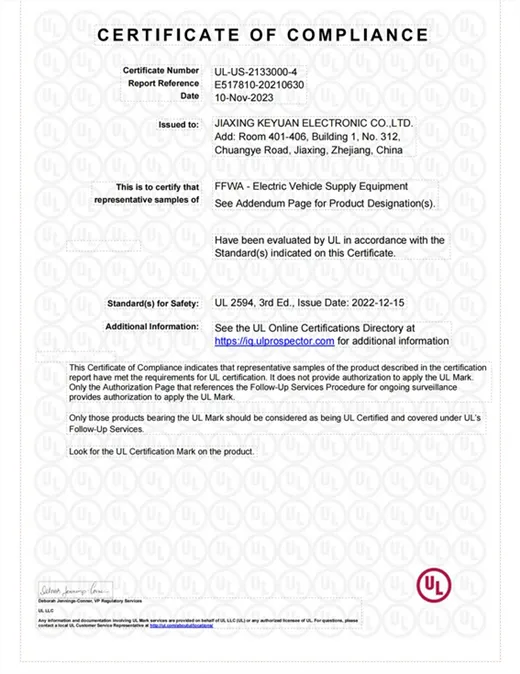
Certificate


Frequently Asked Questions
Q: What is a Fast AC Charger?
Q: How does a Fast AC Charger work?
Q: What is the difference between a Fast AC Charger and a DC Charger?
Q: How fast can a Fast AC Charger charge an EV?
Q: Can any EV be charged with a Fast AC Charger?
Q: Where can I find Fast AC Chargers?
Q: How much does it cost to use a Fast AC Charger?
Q: Do I need any special equipment to use a Fast AC Charger?
Q: Is it safe to use a Fast AC Charger?
Q: Can I use a Fast AC Charger outdoors?
Q: Can I install a Fast AC Charger in my home?
Q: What should I do if I encounter problems with my Fast AC Charger?
Q: Are there any incentives available for purchasing a Fast AC Charger?
Q: Can I use a Fast AC Charger with a solar panel system?
Q: How do I know if a Fast AC Charger is compatible with my EV?
Q: Can I use a Fast AC Charger if I have a home energy storage system?
Q: How do I choose the right Fast AC Charger for my needs?
Q: Can I monitor my EV's charging status with a Fast AC Charger?
Q: Are there any tips for maximizing the efficiency of my Fast AC Charger?
Q: How long do Fast AC Chargers last?
Hot Tags: ac wallbox at home, China ac wallbox at home manufacturers, suppliers, factory, EV Rescue Portable Electric Vehicle Charging System, 50 KW DC Charger, Autel Home Charger, Ultra Fast Charging Station For Electric Vehicles, Autel AC Charger, 120KW DC Charger