


Zhejiang Sinray Electronics : Your Trustworthy Car Charger AC Supplier
Zhejiang Sinray Electronics Co., Ltd. is one of the leading companies in China specializing in the research, development and sales of new energy electric vehicle charging stations and AC and DC charging piles. We have a strict quality assurance system, a complete management system, and high-quality product after-sales service which are our foundation.
Rich Products
We can produce AC electric vehicle chargers, DC electric vehicle chargers, portable electric vehicle chargers, DC fast chargers, 30KW DC electric vehicle chargers, AC vehicle chargers and 22KW AC chargers, etc.
Products Widely Used
We manufacture products for residential charging, commercial use, parking lots, public spaces, dealers and service centers, corporate campuses, municipal infrastructure, car-sharing services and more.
Customizable
Our products can be OEM customized and we hold more than 60 utility model patents; we also provide comprehensive solutions including process flow support, automation technology, services and training.
Quality Assurance
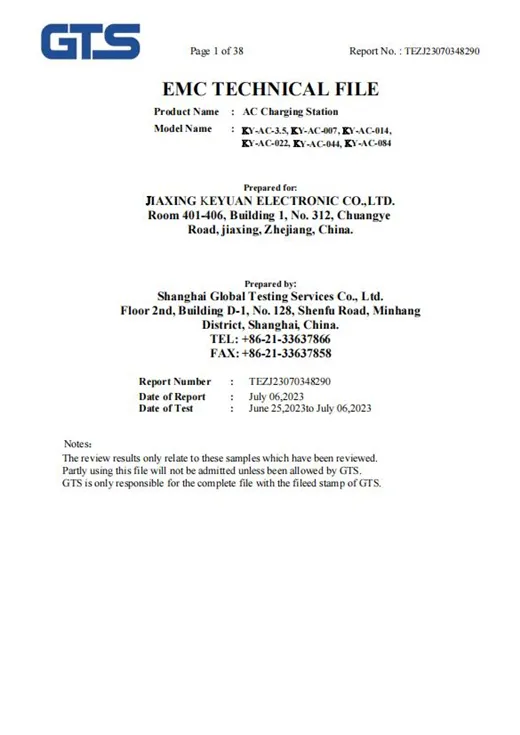
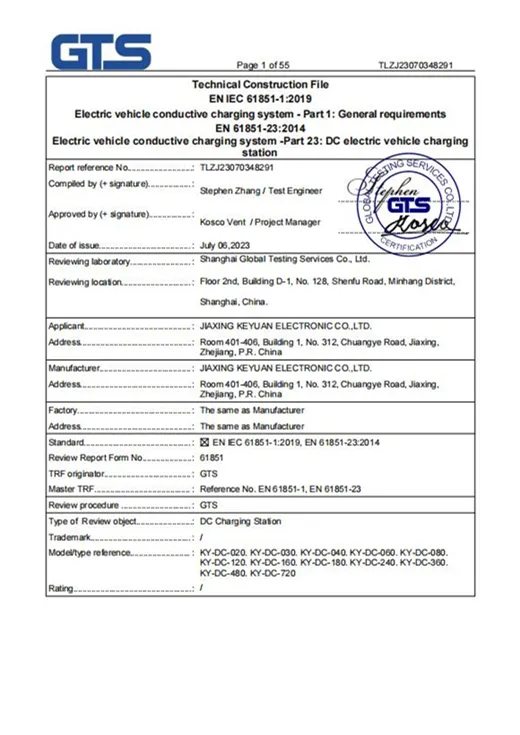
The products produced by our company have passed GTS and CE quality standards. During the warranty period, we will provide after-sales service free of charge.
Related Product Introduction

A 22kW AC charger, also known as a Level 2 charger, is a type of electric vehicle charging station that is capable of providing power at a rate of 22 kilowatts when charging an electric vehicle. These chargers use Alternating Current (AC) power to charge the vehicle's battery.

A 44kW AC charger, also known as a Level 2 charger, is a type of electric vehicle charging station that is capable of providing power at a rate of 44 kilowatts when charging an electric vehicle using Alternating Current (AC) power. These chargers offer a faster charging speed compared to lower power chargers, allowing electric vehicle owners to recharge their vehicles more quickly and efficiently.

A Type 2 Fast Charger, also known as an AC or DC fast charger, is a versatile electric vehicle charging station that is compatible with Type 2 connectors commonly used in Europe and other regions. These chargers are designed to provide rapid charging for electric vehicles, allowing drivers to efficiently recharge their vehicles in a shorter amount of time compared to standard Level 2 chargers.

The 22KW AC charging pile is an efficient and powerful device that provides a convenient charging solution for electric vehicles. Its fast charging speed and high power output allow electric vehicle users to recharge their batteries more quickly and extend their driving range. This kind of charging pile is widely used in parking lots, public charging stations and industrial places, and can meet the charging needs in different scenarios. The 22KW AC charging pile is designed with safety, stability and reliability in mind to ensure that users can charge safely and conveniently. With the popularity and demand for electric vehicles growing, 22KW AC charging piles will play an increasingly important role in the future, contributing to promoting the use of clean energy and achieving sustainable development.

Car Charger AC is a convenient and essential device that provides drivers with a charging solution while driving. By connecting to the vehicle's AC power outlet, this charger allows owners to quickly charge their electric vehicles when needed, without having to stop and wait. Its flexibility and portability allow car owners to ensure that their electric vehicles are always fully charged when traveling or in emergencies, improving the convenience and reliability of the driving experience. At the same time, automotive AC chargers provide important support for the popularization and development of electric vehicles, promote the use of clean energy, and contribute to environmental protection and sustainable development. As electric transportation continues to develop, automotive AC chargers will continue to play an important role in meeting people's growing vehicle needs and concerns about energy efficiency.

The 14KW EV Charger is an efficient and fast charging device that provides convenient charging solutions for electric vehicle users. Its high power output and fast charging speed can help electric car owners recharge their batteries faster and extend their driving range. The chargers are suitable for use in a variety of locations, including car parks, public charging stations and home charging facilities, providing drivers with convenience and flexibility. The 14KW electric vehicle charger is designed with safety, stability and energy efficiency in mind, ensuring users can charge safely and quickly without compromising battery life. With the growth and popularity of the electric vehicle market, 14KW EV chargers will play an increasingly important role in the future, playing a key role in promoting the use of clean energy, reducing carbon emissions, and achieving sustainable development.

The 22KW EV Charger is a high-power, high-efficiency charging equipment that provides electric vehicle users with a fast and convenient charging solution. Its fast charging speed and high power output allow electric car owners to quickly fill up the battery, extend driving range and improve usage efficiency. The charger is suitable for use in a variety of locations, including parking lots, commercial charging stations and home charging facilities, providing users with convenience and flexibility. The 22KW EV charger is designed to focus on safety, stability and reliability, ensuring that users can charge safely and quickly. With the continuous development and popularization of the electric vehicle market, 22KW EV chargers will play an important role in promoting the use of clean energy, reducing carbon emissions, promoting sustainable development, and contributing to the promotion of green energy transformation.

Home Fast Charger For Electric Car
Home Fast Charger For Electric Car is an indispensable device for electric vehicle users, providing owners with a convenient charging solution at home. By connecting to the home grid, this fast charger allows owners to conveniently charge their electric vehicles at home without having to go out and find a charging station. Featuring fast charging speed and high power output, home fast chargers can help electric car owners quickly recharge their batteries, ensuring they have sufficient power in their daily lives. This charger is suitable for various models of electric vehicles, providing home users with a convenient, safe and reliable charging solution. As the popularity and demand for electric vehicles grows, home fast chargers will continue to play an important role in promoting the use of clean energy, reducing carbon emissions and promoting sustainable development. By installing a fast charger at home, car owners can more easily enjoy the convenience and environmental benefits of electric travel.

Installing an electric vehicle charger at home is an important measure to provide electric vehicle owners with convenient charging solutions. The installation of Car Electric Charger At Home allows car owners to easily charge at home without having to go out to find charging stations. By connecting to the home grid, this charger provides electric vehicle owners with a convenient and reliable charging option, allowing them to ensure their vehicles are fully charged at all times. Moreover, if a home charger with fast charging function is installed, car owners can even charge the battery more efficiently, making car use more convenient. The safety, stability and convenience of home chargers are trustworthy, providing electric car owners with a complete charging experience.
What is Car Charger AC
Car Charger AC is a device used to charge electric vehicles, providing power through AC power. This charger provides electric vehicle owners with a convenient and efficient charging solution, allowing them to quickly and easily charge their vehicles when needed. The flexibility and portability of Car Charger AC allows drivers to easily carry it and use it when needed, adding convenience to their travel experience. As a universal charging device, Car Charger AC is widely suitable for different models of electric vehicles, meeting the charging needs of vehicles of different brands and models.
Features of Car Charger AC
Car Charger AC provides power through AC power and has a high power output, allowing electric car owners to quickly charge the battery and extend the driving range. Efficient and fast charging speed improves users' charging efficiency.
Car Charger AC is designed to be portable and flexible, making it easy for users to carry and use. It can be easily connected to home power or other AC power sources, making it convenient for users to charge at different locations to meet charging needs during daily travel.
Car Charger AC is a universal charging device suitable for many models and brands of electric vehicles. Regardless of whether they are vehicles of different brands such as Tesla, Nissan, Chevrolet, etc., users can charge them through this charger.
Car Charger AC is designed with user safety and device stability in mind. It has multiple safety protection measures, such as overload protection, short circuit protection, etc., to ensure that users will not be in danger during the charging process.
Parts of Car Charger AC
Power Supply Unit
This component is responsible for managing the incoming AC power from a household electrical outlet or a charging station. It ensures that the power supply is within the correct voltage and frequency range for the charger to function properly.
Control Unit
Often referred to as the charger's brain, the control unit manages the charging process. It communicates with the vehicle to determine the optimal charging parameters and monitors the charging status to ensure safety and efficiency.
Rectifier
This component converts the AC power into DC power that the EV's battery can accept. The rectifier typically includes a bridge rectifier circuit to perform this conversion.
Charge Circuitry
This part of the charger controls the flow of electricity to the EV's battery. It regulates the current and voltage to match the battery's requirements and prevent overcharging or damaging the battery cells.
Connector and Cable
The charger includes a cable and connector that physically attach to the EV's charge port. The connector type can vary, with common standards including Type 1 (J1772), Type 2 (Mennekes), and others depending on the region and EV model.
Communication Interface
Modern chargers often have communication interfaces, such as Wi-Fi, Bluetooth, or RFID, that enable data exchange with the EV and with a cloud server or smartphone app for monitoring and controlling the charging session.
Protection Circuits
Safety is paramount in charging equipment. Chargers include protection circuits to prevent issues like overcurrent, overvoltage, and ground faults that could harm the user, the EV, or the charger itself.
Casing and Enclosure
To protect the electronic components from environmental conditions and physical damage, AC chargers are housed in durable casings or enclosures that meet safety and regulatory standards.
User Interface
Some chargers feature a display and buttons or a touchscreen interface that allow users to interact with the device, selecting charging modes, setting limits on power delivery, and viewing diagnostic information.
Working Principle of Car Charger AC
Power Connection
The charger connects to a dedicated 240-volt AC power source, which is similar to the voltage used by appliances such as toaster ovens or clothes dryers. Higher voltage and faster charging than standard household 120-volt outlets.
Initialization
When the charger is connected to a power source and the electric vehicle, a control unit within the charger initializes the charging process. It communicates with electric vehicles through the charging port using standardized protocols, such as the Society of Automotive Engineers (SAE) J1772 communications standard in North America or the IEC 61851 series in Europe and elsewhere.
Power Conversion
The charger contains a rectifier that converts AC power from the grid into DC power. The DC output is then adjusted to the specific voltage and current requirements of the electric vehicle battery. This conversion is managed by the charger's control unit, which optimizes charging parameters to maximize efficiency and battery life.
Charging Batteries
The conditioned DC power is transmitted to the electric vehicle's on-board charger via a charging cable and connector. In most electric vehicles, the onboard charger further conditions the DC power before sending it to the battery pack to ensure it is within the safe operating range of the battery pack.
Communication and Control
Throughout the charging process, the charger and EV exchange data to monitor state of charge (SOC), battery temperature and other relevant parameters. The control unit uses this information to dynamically adjust the charging rate to avoid stressing the battery and balance grid load.
Security Function
Built-in safety features continuously monitor the charging process to detect any abnormalities such as overheating, overcurrent, or ground faults. If any potential risks are detected, these features will automatically stop the charging process to protect the user, the electric vehicle and the charging equipment.
How to Choose Car Charger AC
Compatibility
Make sure the AC car charger is compatible with your specific electric vehicle model. Different vehicles may have different charging port types or requirements, so make sure the charger you choose is compatible with your car.
Charging Speed
Consider the charging speed of the car charger AC. A charger with a higher power output will charge your electric car faster. If you prefer faster charging times, you may want to choose a charger with a higher power rating.
Portability and Installation
Decide whether you need a portable charger that you can take with you or if you prefer a stationary charger installed at home. Portable chargers offer flexibility, while stationary chargers provide convenience for home charging.
Security Function
Look for safety features such as surge protection, overcurrent protection, and overheating protection. Making sure your charger has these safety features will help protect your vehicle and ensure safe charging.
Smart Functions
Some car charger AC models come with smart features like Wi-Fi connectivity, mobile app integration, and scheduling options. These smart features enhance convenience and control of the charging process.
Durability and Build Quality
Choose a charger that is durable and built to last. Look for reputable brands and read reviews to ensure the charger is reliable and of high quality.
Price
Consider your budget when choosing a car charger. Compare the prices and features of different chargers to find the one that best suits your specific needs.
How to Install Car Charger AC
Choose the Location
Select a suitable location to install the car charger. Ensure that it is easily accessible and away from any moving parts in the vehicle.
Disconnect the Battery
Start by disconnecting the negative terminal of the car battery to prevent any electrical hazards during installation.
Mounting the Charger
Securely mount the car charger in the chosen location using the appropriate hardware provided with the charger. Make sure it is fixed in place to avoid any movement while driving.
Connect the Wires
Connect the positive (usually red) and negative (usually black) wires of the car charger to the corresponding terminals on the battery. Follow the manufacturer's instructions carefully to ensure proper wiring.
Grounding
It is crucial to ensure proper grounding for the car charger. Connect the grounding wire securely to the vehicle's metal chassis as per the instructions provided.
Secure the Connections
Double-check all connections to ensure they are tight and properly insulated to prevent any short circuits.
Reconnect the Battery
Once the installation is complete, reconnect the negative terminal of the car battery.
Test the Charger
Turn on the car charger to check if it is working correctly. Verify that your devices can be charged using the installed car charger.
How to Use Car Charger AC
Prepare Your Charger
Make sure the charger is properly installed and connected to a compatible 240-volt AC power supply. If it's a portable charger, ensure it is fully assembled and all components are accounted for.
Connect the Charger to the Vehicle
Unlock your EV and locate the charge port. Insert the charging connector firmly into the port. You may hear an audible click or feel a slight resistance when the connector is securely connected.
Start the Charging Process
After connecting the charger to the vehicle, initiate the charging. This can be done manually by pressing a start button on the charger, if available, or by simply releasing the trigger on the charging cable, which may automatically start the charge. Some chargers require the use of a key fob or RFID card to begin charging.
Monitor the Charge
Most modern EVs have a dashboard display that shows the state of charge (SOC), time remaining to complete the charge, and other relevant information. You can monitor these details to keep track of your vehicle's charging progress.
End the Charge Session
Once the desired state of charge is reached or you're ready to leave, end the charging session. This can be done by pressing a stop button on the charger (if available), pulling the connector out of the charge port, or using a key fob or RFID card, depending on the charger's design.
Disconnect the Charger
After ending the charge session, carefully remove the charging connector from the EV's charge port. Ensure the connector is stowed away properly if it's a portable unit.
Safety Precautions
Always follow the manufacturer's instructions for your charger and EV. Avoid charging during a storm or in wet conditions unless the charging equipment is rated for outdoor use and is properly grounded.
How to Maintain Car Charger AC
Regular Inspection
Periodically check the car charger for any signs of wear and tear, loose connections, or damage. Address any issues immediately to prevent further problems.
Keep It Clean
Regularly clean the car charger and its connectors to remove dust, dirt, and debris that may affect its performance. Use a soft brush or a cloth to clean the charging port and connectors.
Proper Storage
When not in use, store the car charger in a safe and dry place to protect it from environmental elements that can cause damage.
Avoid Overloading
Do not overload the car charger beyond its specified capacity. Check the manufacturer's guidelines for the maximum power it can handle to prevent overheating and damage.
Secure Connections
Ensure that the connections between the car charger and the vehicle's electrical system are secure and free of corrosion. Clean any corrosion off the connectors with a suitable solution.
Protect From Extreme Temperatures
Avoid exposing the car charger to extreme temperatures, both hot and cold, as they can affect its performance and longevity. Park your vehicle in a shaded area when possible.
Use Manufacturer's Accessories
Stick to using accessories provided by the manufacturer or those recommended for your specific car charger to maintain compatibility and prevent any issues.
Follow Operating Instructions
Adhere to the usage instructions provided by the manufacturer to prevent misuse of the car charger and ensure its longevity.
Applications of Car Charger AC
Charging smartphones, tablets, laptops, cameras, portable gaming consoles, and other electronic devices that usually use a car charger in a vehicle setting.
Providing a backup power source during power outages or emergencies for essential devices like phones or flashlights.
Ensuring uninterrupted power for devices during road trips by allowing them to be charged at home or in hotels where car chargers are not available.
Powering devices during outdoor activities like camping, hiking, or boating where access to a vehicle for charging may not be possible.
Using car charger AC adapters to power small appliances or tools that can operate on 12-volt DC power, providing flexibility in different work settings.
Charging car diagnostic tools or tire inflators that use a car charger, aiding in vehicle maintenance tasks at home or in the garage.
Certificate




Frequently Asked Questions
Q: What does AC stand for in terms of car chargers?
Q: How fast can an AC car charger charge my EV?
Q: Can any AC charger be used with any EV?
Q: Do I need an electrical inspection to install an AC charger?
Q: What is the difference between a Level 1 and a Level 2 charger?
Q: Is it safe to charge my EV in the rain with an AC charger?
Q: Can I charge two EVs simultaneously with one AC charger?
Q: How do I know if my home's electrical system can support an AC charger?
Q: Are there any government incentives for installing an AC charger?
Q: How much does it cost to install an AC car charger?
Q: What should I look for when buying an AC car charger?
Q: Does an AC charger need its own circuit breaker?
Q: Can I charge my EV without a charger?
Q: What is the lifespan of an AC car charger?
Q: How do I maintain my AC car charger?
Q: Can I charge my EV during a power outage with an AC charger?
Q: What happens if I exceed my electricity usage limit while charging my EV with an AC charger?
Q: Can I charge an EV with solar panels and an AC charger?
Q: How do I reset an AC car charger if it stops working?
Q: What should I do if my AC car charger catches fire?
Hot Tags: 22kw ac charger, China 22kw ac charger manufacturers, suppliers, factory, Portable 220V EV Charger, Autel Home Charger, Portable 240V Charger, 120KW DC Charger, Public Fast Chargers, Public DC Charging Stations